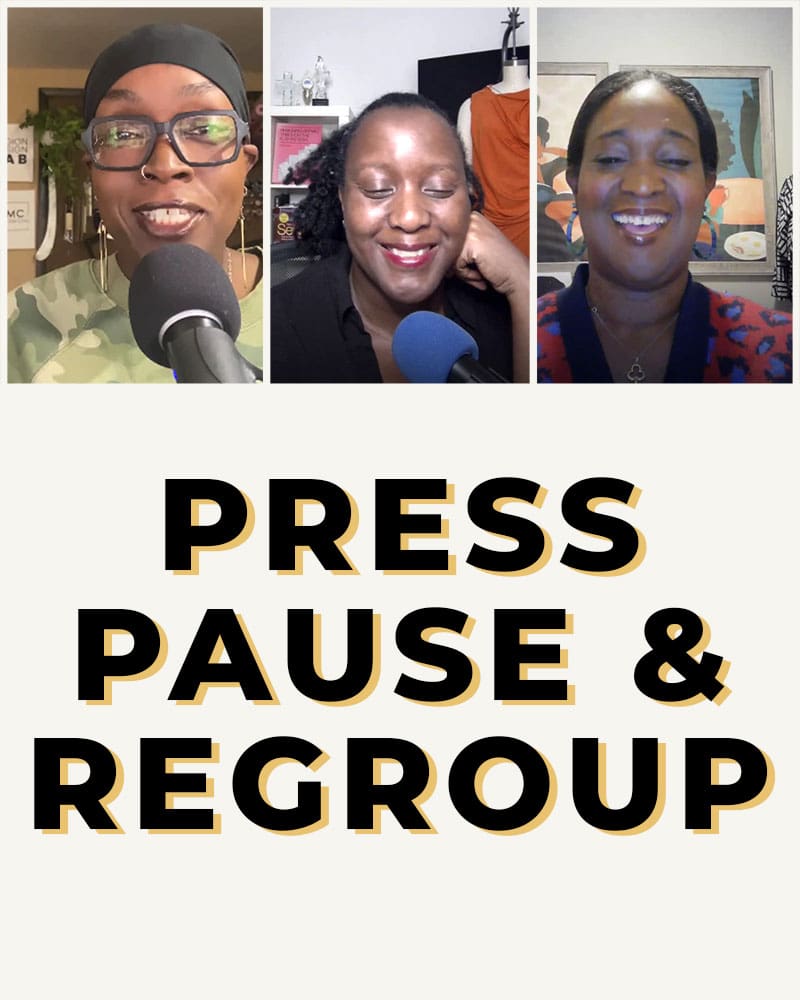
Show Notes
Careers in Fashion: Rethinking the Possibilities
Are you someone who has always been intrigued by the fashion industry, but the traditional roles of designer or stylist don’t quite resonate with you? If so, you’re in for a treat! In our latest podcast series, we dive deep into the world of diverse career paths within the fashion industry, unveiling exciting opportunities beyond the conventional roles.
Uncovering Lesser-Known Aspects of the Fashion World
In this insightful podcast, we take a unique approach, exploring avenues in retail, product development, tech design, and production, shedding light on the lesser-known yet equally captivating aspects of the fashion world. We understand that not everyone fits into the mold of a fashion designer, and that’s why we’re here to unveil the multitude of possibilities that await you.
Drawing Inspiration from Diverse Sources
Join us as we delve into the challenges faced by fashion stylists and unveil alternative entry points into the industry. Our podcast emphasizes the importance of drawing inspiration from various sources, including everyday life and popular culture, challenging the notion that creativity can only stem from traditional sources. We firmly believe that inspiration can come from anywhere, and we’re here to help you tap into that endless well of creativity.
Beyond Design: Careers in Fashion HR, IT, and More
But that’s not all. We also briefly touch on non-design careers in fashion, such as HR and IT, showcasing the diverse skill sets that are in demand within the industry. We encourage you to broaden your horizons and consider volunteering at fashion shows, gaining invaluable experience and insight into the dynamic world of fashion.
Finding Your Unique Path and Niche
Above all, our podcast is a beacon of encouragement, reminding you to stay determined and find your niche based on your natural inclinations. We firmly believe that each individual has a unique path to tread, and we’re here to guide you on your journey to finding your place in the fashion industry.
Redefining Careers in Fashion
So, if you’re ready to uncover the unconventional, the unexplored, and the unexpected within the fashion industry, join us on this captivating podcast journey. It’s time to redefine what a career in fashion means to you.
Tune in, get inspired, and embark on a new adventure in the world of fashion. Let’s explore the endless possibilities together!
Transcript
00:00 – 00:04
Welcome to the Designers Plants & Coffee podcast where we discuss how to succeed as a designer
00:04 – 00:09
while staying true to yourself, finding peace in the process, and making money doing what we love.
00:09 – 00:12
Subscribe on YouTube and wherever you get your podcasts.
00:12 – 00:18
Other things you can do in the fashion industry and make bank without being a fashion designer.
00:18 – 00:25
I know a lot of people shun the retail side of fashion. You can do a lot in retail. You can be
00:25 – 00:31
a buyer. I’ve done visual merchandising where you go and style a store. You can just sell regular
00:31 – 00:37
retail. And I know the newest thing other than being a designer is to be a stylist, which again
00:37 – 00:42
is a great career and you can make a lot of money, but you are going to have to kick, scratch,
00:42 – 00:49
and claw your way to the top because unless you are besties and grew up with a major celebrity,
00:49 – 00:55
it’s really hard to break into fashion styling. You could be a personal shopper if you just love
00:55 – 01:01
to put outfits together. A lot of the upscale department stores have personal shopping services.
01:01 – 01:07
Look into a woman’s wear daily or look on fashioncareers.com and just see what some of the
01:07 – 01:13
other ways into the industry are other than being an actual designer. And you’re talking about the
01:13 – 01:17
retail and the first thing that for a stylist that comes to mind is there’s a movie called
01:17 – 01:24
Scatter My Ashes at Bergdorf’s. They actually discuss her career at Bergdorf’s as a stylist
01:24 – 01:30
and how she goes about the process. This woman has been there for such a long time. She’s a
01:30 – 01:38
really good personal stylist. You actually will see a lot of different roles being played out in
01:38 – 01:43
the Valentino. You’ll see the trend person come in and they’re showing them colorways and then
01:43 – 01:49
showing them prints. I think it’s Michael Kors and Louis Vuitton. He actually shows their workshop
01:49 – 01:56
and you can see how everyone in their works roles and how they play a part in fashion. Then there’s
01:56 – 02:03
product development. You don’t necessarily have to design, but you are involved in the process
02:03 – 02:09
of developing the garment. So product development basically takes it from the designer and moves it
02:09 – 02:15
through to the production. And when the lab dips come on and what is a lab dip is basically if I
02:15 – 02:20
have like a custom color that I want, like I chose a Pantone color that I want. They send it over to
02:20 – 02:25
the factory and it comes back and the product development person matches the color to make
02:25 – 02:30
sure that this works and the trims are right and everything’s together. Then tech design,
02:30 – 02:37
which TIFF does, looks at the fit of the garment and puts it on the form or puts it on the model
02:37 – 02:42
and makes sure everything works. And then it goes back to the factory. Just as this one product,
02:42 – 02:47
everybody’s touching it. The designer comes up with the concept, but there’s a whole bunch of people
02:47 – 02:51
that makes it happen. Product life cycle. A whole product has to go through a complete cycle and
02:51 – 02:57
then you start all over with another product for the next season. You might do two or three products
02:57 – 03:02
at a time. Well, you know what? If you’re a small company, you start off doing it all.
03:03 – 03:09
But sometimes you do have contractors, depending on what your volume is. So if you love to travel,
03:09 – 03:13
look into production because you get to travel. But usually with production,
03:13 – 03:19
they ask you to speak a different language. We get a lot of Pakistan and Bangladesh, even now
03:20 – 03:26
Mexico, Central America, a lot of things in Guatemala. So learn a language. The representatives
03:26 – 03:32
speak English, but the people actually doing the work who you need to communicate with may not.
03:32 – 03:37
That’s why the tech pack is so important because people who don’t speak English and don’t read the
03:37 – 03:40
language, they look at the pictures, you know, and then they go off the pictures. So if your
03:40 – 03:44
picture’s wrong and your description is right, your description is right. They go off the pictures
03:44 – 03:48
like, why was this wrong? It’s like, that’s what your picture does. It’s full circle,
03:48 – 03:54
but it really comes back to that production and that tech pack. Everything that you do
03:54 – 03:58
is going to start with a really good technical designer keeping your stitches.
03:58 – 04:04
I would say the person that manages the showroom and also who manages the factories. And because
04:04 – 04:09
the showroom assistant, so once the garments, once your sample garments are made, it’s placed
04:09 – 04:15
into a showroom. And then when the market week opens up, meaning the market week means that
04:15 – 04:20
the merchandisers go around to different showrooms and they view your collections to decide what are
04:20 – 04:26
they going to buy? Yeah. So you need someone who can tell a really good story to set your showroom
04:27 – 04:33
to tell your story of this entire collection and then salespeople who are going to, you know,
04:33 – 04:38
sell your goods. And then there’s this part of this, um, actually brand rep that do the selling.
04:39 – 04:45
There’s also people that, um, production people that put on fashion shows and then it is a whole
04:45 – 04:51
slew of people that come after that and there’s photographers. So you don’t have to be a designer,
04:51 – 04:55
but you can be a fashion photographer. If you want to get even more technical people that build
04:55 – 05:01
websites for fashion design. Social media, you need a publicist now for your branding. You need
05:01 – 05:06
a social media person. You need influencers. Especially in today’s age, but I will definitely
05:06 – 05:13
say brand love lab who I consult with. They are really great at helping companies to develop
05:13 – 05:20
their brand, to really, really put it out there of doing the research and going back and looking
05:20 – 05:25
at the overall company and helping them to tweak their brand to really meet today’s customers.
05:25 – 05:30
Just Google something like careers in fashion. They have college classes. Everybody goes for
05:30 – 05:36
fashion designers, but you can also look to see other majors, other things that you can get
05:36 – 05:42
degrees in. I think like FIT has a global channeling or something of that nature where
05:42 – 05:48
actually for fashion, you’re doing global. So it’s not just domestic. So, you know, all about
05:48 – 05:54
every industry because just because the US does it one way, you go to Europe, they do it a different
05:54 – 05:58
way. And not even Europe, they’re going to do it different in Italy than they do in London.
05:58 – 06:03
Also sourcing in general. So you’re sourcing fabric, you’re sourcing trims, production houses in terms
06:03 – 06:08
of who’s going to make your goods and stuff like that. Textile designers. Somebody has to design
06:08 – 06:15
these prints. A huge, huge market. I would also say study fashion history. And also you can do
06:15 – 06:21
costume design. Costumes in, what’s the movie that we watched, the series that we watched from HBO?
06:21 – 06:27
The Gilded Age. So that’s also one of the reasons why I love the costumes from The Gilded Age,
06:27 – 06:34
but also from the first Hunger Games. I love the costumes. I think the biggest thing is to just
06:34 – 06:41
find inspiration in everything. That’s one thing for a designer to do, because that’s how you get
06:41 – 06:44
ideas. Like you take it and say, oh, I like the way she’s wearing that, or I like the way he’s
06:44 – 06:48
wearing that. And you flip it with something else and you put it together. I love doing that.
06:48 – 06:55
I love bags. So I always keep a little notebook. If I see someone with a bag in a shape that I like,
06:55 – 06:59
I’ll just kind of sketch the shape of their bag and just kind of make it your own. Now,
06:59 – 07:03
don’t be a creep about it. But you know, wear your sunglasses so people won’t think you’re
07:04 – 07:09
weirdo and staring at them. Any other careers in fashion that doesn’t involve designing?
07:09 – 07:17
Still the basic HR, IT. Yeah. Every company needs it. Lawyers, they all need it. There’s perks to
07:17 – 07:22
working in the industry. You know, you can work in IT or HR, but you can still get the
07:23 – 07:29
company. But you know, be inspired by fashion shows. Just look at behind the scenes. Makeup
07:29 – 07:34
artists, hairstylists. Also, if you can, volunteer because they do accept volunteers
07:35 – 07:39
for some of the fashion shows, fashion week. Anybody can think of anything else,
07:39 – 07:45
please list it in the comments or, you know, tag us at Designers, Plants and Coffee on Insta.
07:45 – 07:50
Hang in there. You will find where you belong. And I would say use the, think about the thing
07:50 – 07:56
that you do so quickly, so freely, and actually ask the people around you because they may
07:56 – 08:00
actually be able to help you to say, okay, yeah, you might be a good fit for that. Or you do not
08:00 – 08:05
have the temperament for that. They’ll be honest with you. But it’s the thing that you do so
08:05 – 08:11
frequently, it’s so easy. It just flows out of you without you even realize that that’s what
08:11 – 08:15
you’re doing. Like actually you would do it for free for yourself, like for some of the family
08:15 – 08:21
members. You would do it for free. So I’m Zaheer from Cover Me Chic. Letitia from Keeping You
08:21 – 08:22
in Stitches.