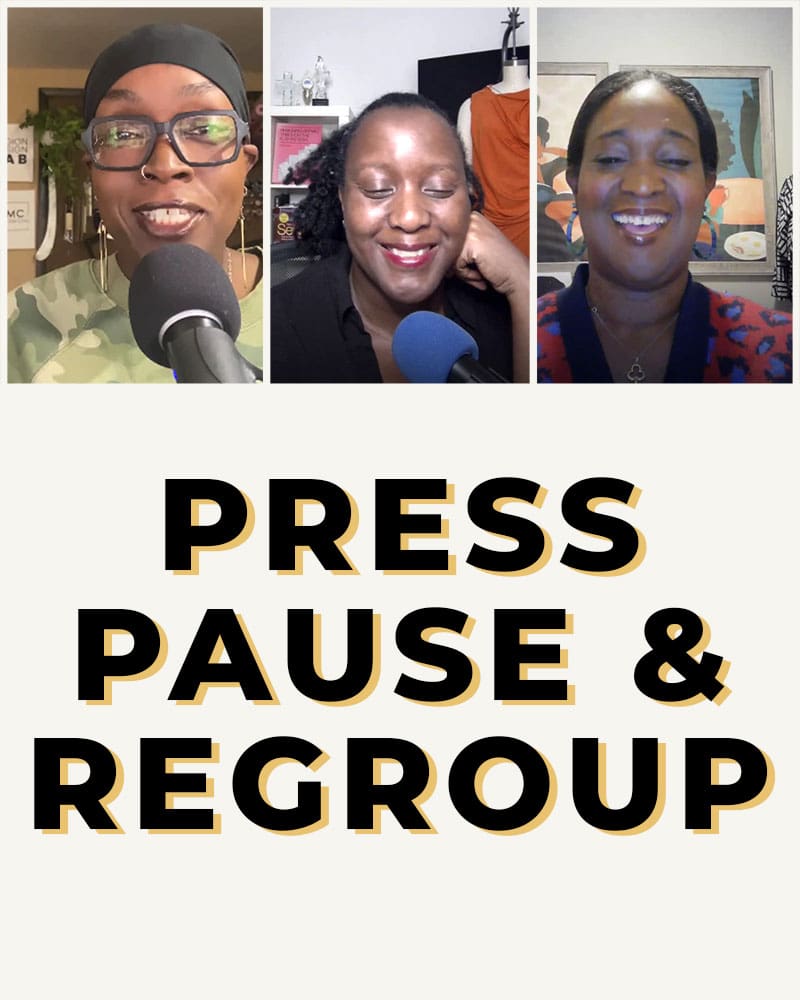
Show Notes
In the fast-paced and fiercely competitive world of design, the importance of protecting one’s work cannot be overstated. In our latest podcast episode, we delve deep into the challenges faced by designers in safeguarding their creations and brand, shining a light on the critical need for trademarking once a brand is established.
One of the most compelling stories we uncover revolves around a designer whose name was unexpectedly trademarked by a factory overseas, leaving them reeling from the impact of lacking trademark protection. This cautionary tale serves as a powerful reminder of the vulnerabilities creatives face in an increasingly global marketplace.
Moreover, we take a closer look at the legal battles that have rocked the fashion industry, where disputes over logos and distinct packaging have become all too common. Our discussion underscores the vital need for resources and strategies to effectively defend trademarks, particularly in an environment where the line between inspiration and infringement can be alarmingly thin.
For independent artists, the distinction between copyrighting and trademarking artwork can be a maze of complexity. Our podcast addresses this head-on, providing clarity on the nuanced differences and underscoring the importance of thorough research before selling products online. As the digital landscape continues to evolve, understanding the intricacies of intellectual property rights is paramount for any designer looking to carve out their niche and protect their creative vision.
Join us as we unravel the intricate web of trademark protection, legal battles, and the evolving landscape of intellectual property in the design world. Tune in to gain invaluable insights that will empower you to navigate the complexities of protecting your work and brand in an ever-changing industry.
Listen to the full podcast episode and arm yourself with the knowledge to safeguard your creative endeavors. Don’t let your hard work go unprotected – because in the world of design, your creations deserve to be celebrated and defended.
Transcript
00:00 – 00:04
Welcome to the Designer’s Plants and Coffee podcast where we discuss how to succeed as a designer
00:04 – 00:09
while staying true to yourself, finding peace in the process, and making money doing what we
00:09 – 00:12
love. Subscribe on YouTube and wherever you get your podcast.
00:12 – 00:18
We get a lot of questions about how to protect your work, and I will say it’s almost impossible
00:18 – 00:24
to keep that from happening because if you look at a major designer and then you look at the
00:24 – 00:29
stuff that’s in a fast fashion house, it’s all the same thing. The difference is the quality
00:29 – 00:36
of it. Protecting your design is a whole different topic from protecting your brand. So if somebody
00:36 – 00:41
were to come out with Fearless threads and they were to have script intact and the needle running
00:41 – 00:46
through it, then I would have an issue because they’re copying my brand. But if somebody were
00:46 – 00:53
to take the jacket I made and make it and not use the materials I use and sell it for $60 where
00:53 – 00:58
I sell mine for $200. There’s nothing I can do about it. Because let’s face it, we’re all inspired
00:58 – 01:03
by other art, other people, other things that we see. So I don’t believe that imitation is the
01:03 – 01:08
best form of flattery because my work is my work, but you just kinda have to take it with a
01:08 – 01:08
grain of salt.
01:08 – 01:14
Also, your intellectual property, meaning your brand, you have to protect at all costs. So once
01:14 – 01:18
you become established and you building your brand, you have to get a trademark. I mean, I wouldn’t
01:18 – 01:23
say you do that right away because it can get expensive. When you know that this is what you’re
01:23 – 01:28
gonna do and this is the way you’re going forward, protect your brand. I saw something on Instagram,
01:28 – 01:34
like, recently. There was this woman who basically got her stuff made overseas, and she didn’t
01:34 – 01:39
have her thing trademarked. So the factory researched it Mhmm. Saw that she didn’t have her
01:39 – 01:44
thing trademarked and actually trademarked her name. Her is because she already had this stuff
01:44 – 01:50
in the market and she can prove it. But it cost her a whole bunch of money, bunch of time, lawyers
01:50 – 01:55
back and forth. So your intellectual property, you have to protect. Your designs, honestly,
01:55 – 01:59
it’s a dime a dozen. You just have to move forward. Put it out fast. Get with your get your
01:59 – 02:00
money and move on.
02:00 – 02:06
There is no law in the US to protect your designs. However, when you go overseas to Europe,
02:06 – 02:08
they have laws to protect designs.
02:08 – 02:09
Mhmm.
02:09 – 02:15
So please do not try to go over there, have a design, and you try to, knock something off over
02:15 – 02:21
there. You will get sued. Even if you are a US based designer, you will get sued. But in the
02:21 – 02:23
US, it’s a free for all.
02:23 – 02:28
Everybody knows the 3 stripes, Adidas. So in the industry, a lot of people wanna copy that,
02:28 – 02:32
especially the the discounters. Mhmm. Want to copy the Adidas because, you know, it’s a recognizable
02:32 – 02:37
symbol. They trademark that, and they go after people who use the 3 stripe. Nobody can use the
02:37 – 02:42
3 stripes in that order, those sizes, those distances away from each other because you will get sued.
02:42 – 02:48
It’s the same thing with licensed products too. So you can’t take your favorite sport team and
02:48 – 03:03
make something out of the fabric the commercial use. And they have a team that sits on places
03:03 – 03:13
like Etsy and Shopify and Facebook, cannot afford it. Everyone knows about the Rothlawn Polo
03:13 – 03:15
cannot afford it.
03:15 – 03:21
Everyone knows about the Ralph Lauren Polo brand. Well, there’s another brand that is, US Polo
03:21 – 03:27
Association, and then it took them nearly decades because Ralph Lauren went after them for trademark
03:27 – 03:32
infringement. So now if you all ever see the US Polo Association, they still have the horse,
03:32 – 03:35
but they don’t have just 1 polo player. They have, like, 2.
03:35 – 03:35
Sorry, guys.
03:35 – 03:41
Thing was just because everyone was thinking this was the same thing, and it’s not. Also with
03:41 – 03:45
the Christian Louboutin, the, red bottoms, they came out with this shoe that was all red and
03:45 – 03:50
the bottom of the sole was red. Christian Louboutin tried to sue for the red bottoms. Well,
03:50 – 03:55
he lost that suit because there was nothing special about the red paint, and he just put it
03:55 – 04:01
on the bottom of the sole. However, someone else would try to put their packaging the same color
04:01 – 04:06
blue and the same little white, white bow as Tiffany. Their packaging, all of that is actually
04:06 – 04:12
protected it under trademark and packaging. So if Christian Louboutin had actually had some
04:12 – 04:18
type of special packaging with the red sole in the bar, he may have been able to get away with
04:18 – 04:21
that, but, hey, it’s just red paint on the bottom of his sole.
04:21 – 04:25
Didn’t he go back and create a custom paint after that? So you can paint the bottom of your
04:25 – 04:32
shoe red, but you can’t use paint number x y z from Yeah. Wherever he gets it from. So, yeah,
04:32 – 04:37
he he learned his lesson from that and said, okay. I can’t tell them they can’t make red bottoms,
04:37 – 04:40
but I can tell them they can’t make my red bottom. So Right.
04:40 – 04:44
And there was also this thing on Instagram going back and forth. I know Nike was going after
04:44 – 04:50
a lot of independent sneaker makers because they were using the Air Force 1, mold to make their
04:50 – 04:54
own sneaker. But, I mean, they changed it and put their their logo on it. But in fact, it was
04:54 – 05:00
still just the Air Force 1 mold. And everybody knows how famous the Air Force 1 is. So have
05:00 – 05:05
to change it enough so that it’s your own. You know, I think the the lawyers, you cannot mistake
05:05 – 05:10
it. If you just look at it and you automatically think it’s that brand, then they have means
05:10 – 05:14
to come after you. You have to change it enough so that you’re not competing with the original.
05:14 – 05:17
You can trademark anything you want. I mean, sometimes it goes through. Sometimes it doesn’t.
05:17 – 05:21
Right. But it doesn’t matter if you don’t have the resources to go after anybody. Right. So
05:21 – 05:26
you have to really be aware of what you’re trademarking. I mean, your name, absolutely. But
05:26 – 05:30
when you start trademarking, like, items like the 3 stripes, the the plaid, the red bottoms,
05:30 – 05:35
that kind of stuff, you have to have the resources to actually go after the people to back yourself
05:35 – 05:38
up. Yes. Otherwise, people gonna knock you off and you can’t do anything about it. You know?
05:38 – 05:41
And when I’m talking about resources, I mean money for lawyers
05:41 – 05:47
to You even need to pay somebody to sit like Nike does or like the NFL does all day and search
05:47 – 05:52
through all of these places to see if somebody is using your thing. That costs money.
05:52 – 05:57
The other side of it is copywriting. You know? And a lot of people ask if you wanna copyright
05:57 – 06:01
your art. If you’re an artist, if you paint and stuff like that, if you have original pieces
06:01 – 06:05
and you start to produce it, yes, you can copyright that stuff. But when you start putting,
06:05 – 06:10
like, graphics on t shirts and stuff, in terms of money and time, it’s not necessarily worth
06:10 – 06:16
it because next season, you wanna do something else. So copywriting is a little bit less protective,
06:16 – 06:21
honestly, than trademarking. And when you start to get into graphics, not unless it’s very specific.
06:21 – 06:25
It really doesn’t matter. It doesn’t make sense to financially if you’re starting out. Now if
06:25 – 06:30
you’re like a big brand and, you know, you’re doing something, like, original, unique yes. Okay.
06:30 – 06:34
Fine. You have the resources to do that. But if you’re just like an independent and you you
06:34 – 06:38
don’t wanna put your artwork out there just because, you know, you feel somebody gonna take
06:38 – 06:39
it? No. They’re gonna take it anyway.
06:39 – 06:44
It’s it’s so funny because I do a lot of pop ups and I meet a lot of people. And there is a
06:44 – 06:50
woman at this pop up I was doing was selling this specific t shirt with a specific word that
06:50 – 06:56
another person uses. And I was like, I don’t think that’s the original girl, but I’ll buy 1.
06:56 – 06:59
You know? I’m gonna support. And I was talking to my sister. She’s like, you know, that’s not
06:59 – 07:04
the original girl. I was like, I didn’t think so because it was, a, it was cheap. But what she
07:04 – 07:11
did is she took those same words and she changed the font, and she put this little teeny logo
07:11 – 07:15
at the bottom. And that was her 25%. So it could be something as simple as that.
07:15 – 07:20
That’s one thing that you can trademark because inside the site, that is the lining that I always
07:20 – 07:24
use, and it has to be a certain color, but you can trademark that, you know, that specific thing.
07:24 – 07:28
And it’s it’s a whole slew of ways you have to prove that this is yours.
07:29 – 07:36
Making sure you do your research. And I say that because I sell a few things on Amazon. Before
07:36 – 07:43
I’m submitting these my graphic and my artwork, it actually goes through a system of Amazon
07:43 – 07:48
checking to make sure that whatever I’ve created, they check the trademark to make sure that
07:48 – 07:53
I’m not posting anything on their site that will get flagged. And then as a result, they they
07:53 – 08:00
would sue me. And they will actually send you the website to go to, US trademark so you could
08:00 – 08:04
check it for yourself. Make sure when you’re researching that the trademark that you’re looking
08:04 – 08:10
for is for a powerful, whatever your type you’re trying to sell. Because someone could have
08:10 – 08:12
the same name, but they have a completely different product.
08:12 – 08:17
Right. Because when I first started, I did the same thing. And there was a company in the Midwest,
08:18 – 08:23
called Fearless Threads. Their logo was different, and they sold t shirts. So I’m like, so if
08:23 – 08:28
they sell t shirts and I sell this, can we have the same thing? Our logos were completely different.
08:28 – 08:33
They can’t sue me for stealing words. Now if I had a T shirt brand called Fearless Threats,
08:33 – 08:38
they could say, hey. We’ve been in business since 19 whatever, and you just started, and you
08:38 – 08:40
have to stop using that name. So
08:40 – 08:45
And I have a, like, a similar story because when I had Cover Me Chic, someone else had the name
08:45 – 08:49
in there. I think there was something like baby club. But at the time, you know, I was denied
08:49 – 08:53
the first, you know, but then they did not renew the year of any
08:53 – 08:53
more. Thing. Yeah.
08:53 – 08:58
A year later, I was able to trademark that name. So you have to renew I think it was every 10
08:58 – 09:02
years, the first time, then it’s every 5 years, but you have to stay on top of your intellectual
09:02 – 09:06
property. I I did it through a lawyer. You can do it yourself. It’s a lot more tedious.
09:06 – 09:11
We all live in major cities, but there is an organization in DC called the Washington Area Lawyers
09:11 – 09:17
for Artists, w a l a, something to that effect. And they specifically work with artists as their
09:17 – 09:22
counsel. Some of it is pro bono. You may have to pay something, but you can always go there
09:22 – 09:27
and get information. You go to small business administration and get information. There are
09:27 – 09:32
resources out there where you can start for cheap or free. Heck, call the Patent and Trademark
09:32 – 09:37
Office. Right. People sit there all day long waiting for you to ask them questions. It’s just
09:37 – 09:43
like taxes. Call IRS if you can’t afford a CPA and say, hey. How am I gonna not get in trouble?
09:43 – 09:46
There are instances out there. It’s just gonna take patience and research.
09:46 – 09:49
Yeah. And that’s the thing. It’s like, if you don’t have the money, you’re gonna have to have
09:49 – 09:54
the time. One more thing about the trademark. When you trademark the US patent is US patent
09:54 – 09:59
and trademark. Yes. And it’s only trademarked in the US. Now if you start selling stuff overseas,
10:00 – 10:04
you have to trademark it to wherever you’re selling your product because somebody over there
10:04 – 10:09
might have the same name. And because the Internet is so global now, it’s interesting how you
10:09 – 10:13
might have the same name as somebody else selling the same product, but it’s not trademarked
10:13 – 10:18
in that country. Don’t let anything stop you. You know? Don’t let anything stop you from moving
10:18 – 10:23
forward with what you need to do or what you wanna do. We’re just saying the steps that you
10:23 – 10:27
need to take before you start putting yourself out there, but put it out there anyway. Protect
10:27 – 10:31
your intellectual property because that’s the most important, but designs are a dime a dozen.
10:31 – 10:35
We take inspiration from everywhere. Oh, I don’t wanna do this because somebody’s gonna steal
10:35 – 10:40
it. It’s already been stolen. Okay. So that was it. I hope we got something out of this. If
10:40 – 10:45
you have any questions about it, we can answer it to the best of our ability, but you do need
10:45 – 10:51
to speak to a lawyer, a trademark lawyer, specifically, intellectual property lawyers so that
10:51 – 10:53
they can guide you in the right direction.
10:53 – 10:58
All right. So that’s all for now. I’m Leticia Winston and keeping your stitches with as I hear
10:58 – 11:05
it Cover Me Chic in Regent Design Agency and Naima Dozier of Feelers threads. Until next time.